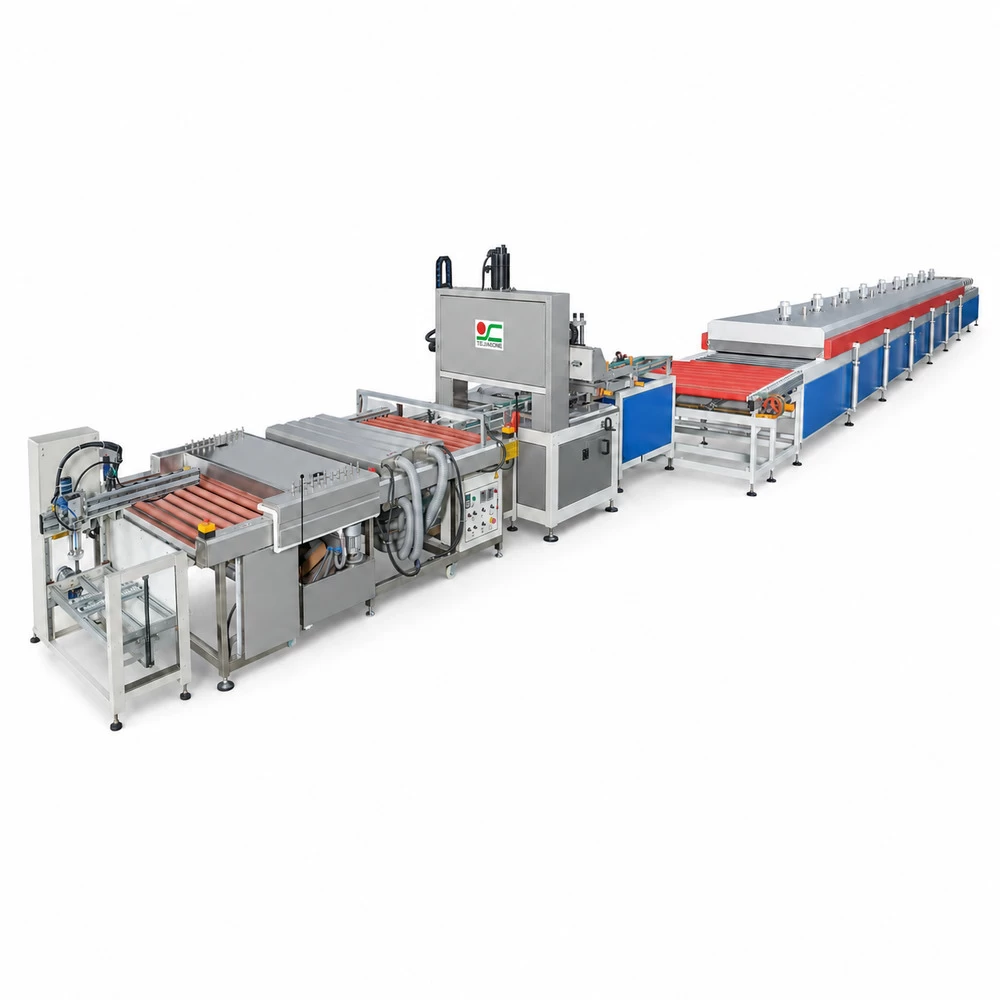
Automatic Screen Printing Production Line
- Modular loading, cleaning, printing, drying, and unloading architecture
- Coordinated controls and panel transfer across the complete process
- Engineered from buyer drawings, throughput goals, and plant layout
-
Estimated Delivery:Oct 30 - Nov 03
Automatic Screen Printing Production Line
This automatic glass screen printing production line is configured as a connected process rather than a single fixed machine. A typical arrangement can include a loading manipulator, cleaning equipment, a screen printer, transfer tables, a tunnel drying furnace, and unloading or stacking equipment. Coordinated controls reduce repeated manual handling and help maintain panel orientation between cleaning, printing, and curing. Because line performance depends on every process step, the final proposal is developed from part drawings, glass range, print coverage, ink and curing requirements, target throughput, inspection points, utilities, and the customer’s available layout.
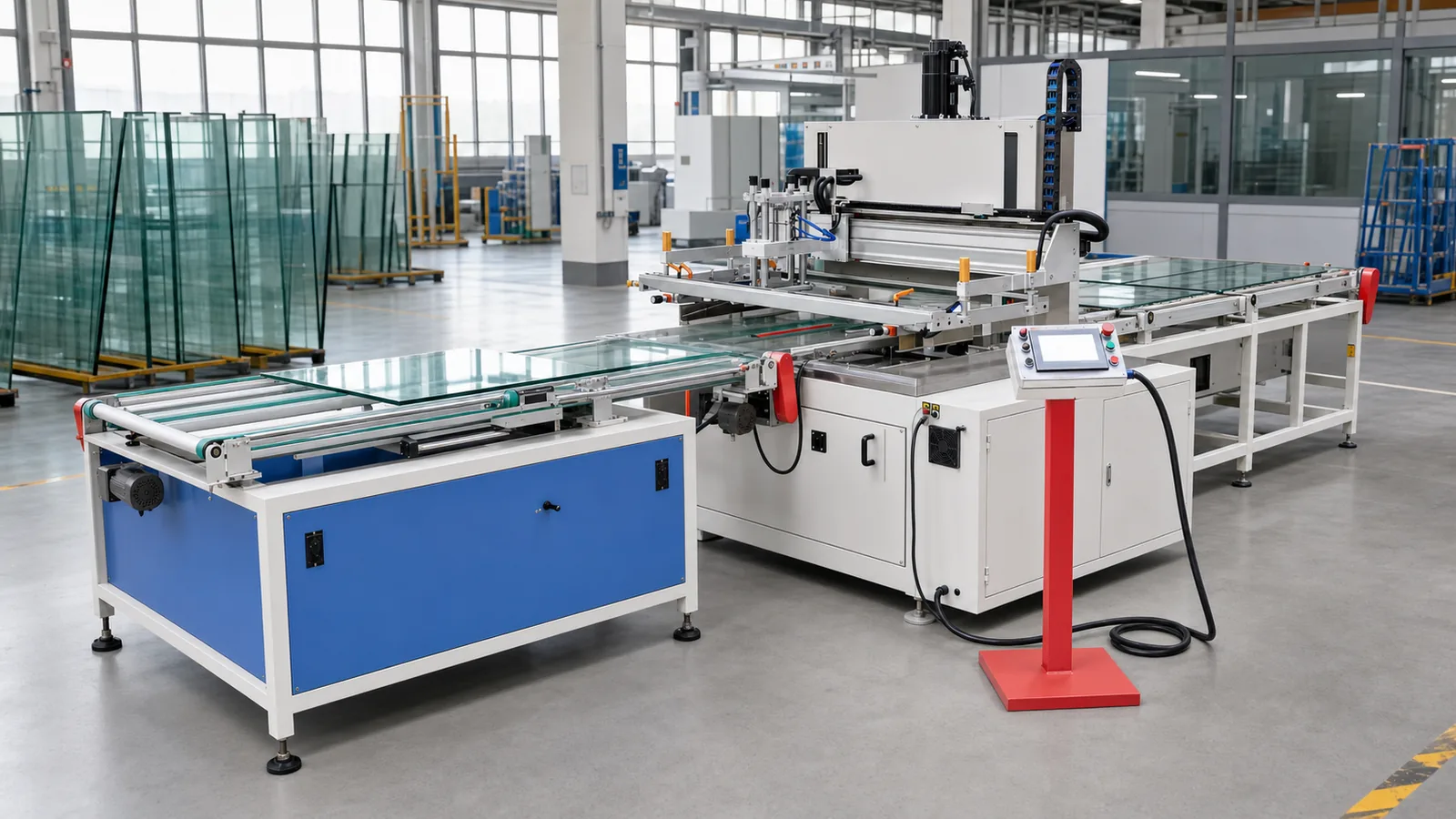
Illustrative application scene based on the product configuration; final line layout is project-specific.
Key Features
Modular architecture allows loading, cleaning, printing, drying, and unloading to be combined.
Coordinated panel transfer helps preserve orientation throughout the process.
Touchscreen controls organize recipes, operating sequences, and fault guidance.
Automatic centering supports repeatable positioning before printing.
Servo-controlled positioning and printing axes provide adjustable production settings.
Inspection, buffering, reject handling, and downstream automation can be planned as required.
Layout can be configured for available floor space and preferred material-flow direction.
Product Specifications
| Line module | Typical function | Configuration basis |
|---|---|---|
| Loading manipulator | Moves panels from rack or station to the line | Glass size, weight, orientation, cycle target |
| Cleaning machine | Prepares the printable surface | Contamination, glass thickness, required cleanliness |
| Screen printer | Applies the specified graphic or coating pattern | Print area, screen frame, ink, registration |
| Transfer or turning table | Controls direction, spacing, and inspection access | Layout, flow direction, buffer requirement |
| Tunnel drying furnace | Dries or cures the selected low-temperature ink process | Temperature, residence time, conveyor material |
| Unloading or stacking | Transfers finished panels to racks or downstream equipment | Pack pattern, rack design, handling method |
Line length, installed power, air demand, capacity, and control interfaces are project-specific. Confirm these values after the process and layout review.
Applications
- Architectural, appliance, furniture, and decorative flat-glass production
- Facilities consolidating separate printing and drying operations
- High-mix lines requiring configurable recipes and controlled panel flow
- Projects adding automated loading or unloading to an existing printing process
Customization Options
- Line layout, flow direction, working height, buffers, and inspection positions
- Loading and unloading method for racks, carts, or upstream conveyors
- Printer format, screen frame, ink delivery, and registration approach
- Dryer heating method, conveyor material, temperature zones, and exhaust interface
- PLC handshakes, HMI language, guarding, and connection to factory systems
Packaging & Shipping
A complete line is documented and packed by module so that conveyors, controls, manipulators, and process equipment can be identified during installation. Container planning, lifting points, moisture protection, spare assemblies, and destination-site unloading should be agreed after the approved layout is frozen.
Manufacturing & Quality Control
- Process-flow review covering loading, cleaning, printing, curing, inspection, and unloading
- Mechanical alignment of connected conveyors and transfer points
- I/O and control-sequence testing for module handshakes and fault recovery
- Recipe, sensor, interlock, emergency-stop, and alarm verification
- Trial operation using representative glass when materials and process conditions are available
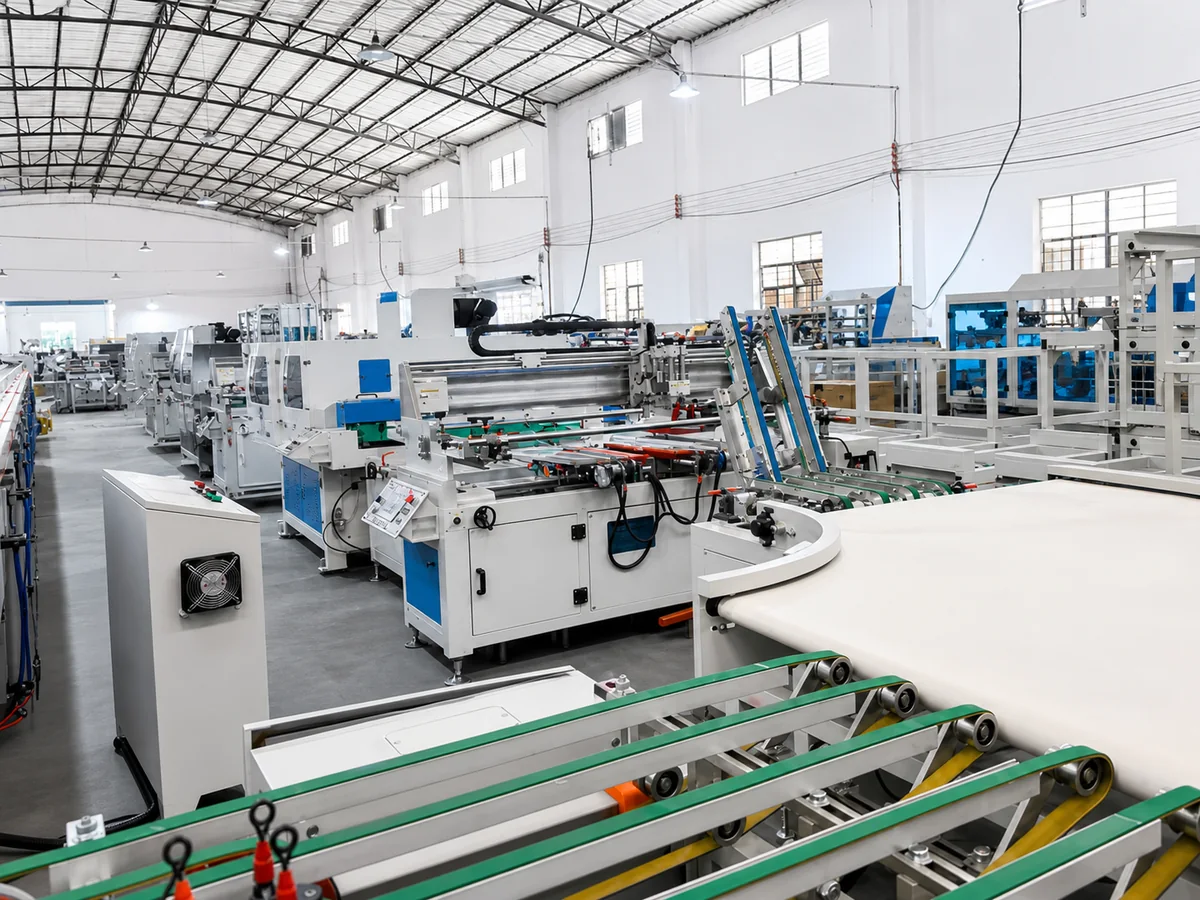
Workshop equipment and production-floor view used to support assembly and process review.
Frequently Asked Questions
What products do you manufacture?
YISEN focuses on configured automatic glass screen printing lines with selected loading, cleaning, printing, transfer, drying, inspection, and unloading modules. The exact machine or line scope is selected from the buyer’s substrate, process, layout, and integration requirements.
What industries use this equipment?
Typical users include architectural, appliance, furniture, decorative, and other flat-glass processing plants that need a connected printing workflow. Suitability should be confirmed with actual part drawings, materials, process data, and required output.
Do you offer customization or OEM/ODM services?
Custom options can cover line layout, working height, flow direction, buffers, inspection stations, printer format, dryer arrangement, loading and unloading method, controls, and safety guarding. OEM or ODM requirements should be defined in writing and reviewed against the final technical configuration.
Can packaging and shipment markings be customized?
Transport frames, crates, moisture protection, lifting access, labels, and shipment markings can be discussed after the machine layout and shipping route are confirmed. Any logo or special marking requirement should be included before packing approval.
Can you provide a product brochure or technical catalog?
An electronic brochure and available technical information for Automatic Screen Printing Production Line can be supplied during the inquiry. Ask for the latest revision and identify the models or process steps you need to compare.
What information is required for a quotation?
Please provide part drawings, glass range, print coverage, ink and curing data, desired process sequence, target output, floor plan, utilities, upstream and downstream interfaces, and destination. The quotation is based on the approved scope and final specification rather than unverified assumptions.
Which Incoterms can be discussed?
EXW, FOB, CIF, or DDP arrangements can be reviewed depending on the destination, equipment scope, and available logistics service. The applicable Incoterm, named place, cost coverage, and responsibilities will be stated in the final quotation.
Where is your factory, and can buyers visit?
The factory is located at No. 2, 8th Road, West Area 2, Lianhe Industrial Zone, Luocun, Shishan Town, Nanhai District, Foshan, Guangdong, China. Buyers can request an appointment so the relevant equipment and technical staff can be scheduled.
Can you sign an NDA?
An NDA can be reviewed before the buyer shares confidential drawings, samples, or process information. Signature and information-handling requirements depend on acceptance of the final terms.
What documentation, training, and after-sales support are available?
The project scope may include operating manuals, electrical information, setup records, operation videos, remote training, commissioning support, and spare-parts planning. Confirm the required language, service location, response method, and included deliverables in the contract.
Related Equipment
Browse Automatic Glass Printing Lines or review .
Request a Configuration Review
For a project-specific recommendation, send the information below. YISEN will review the operating range and propose a configuration based on the final specification rather than applying unverified standard assumptions.
- Product or substrate type
- Minimum and maximum dimensions
- Thickness and surface condition
- Application environment
- Required process or customization
- Estimated purchase quantity
- Packaging and shipping requirements
- Destination country and target schedule
Discover more in our FAQ
How long does it take to process an order?
Do you ship internationally?
What is your return policy?
What are your sizing options?
YISEN empowers global manufacturers with intelligent screen printing, packaging, and automation solutions built for precision, efficiency, reliability, and sustainable growth.