
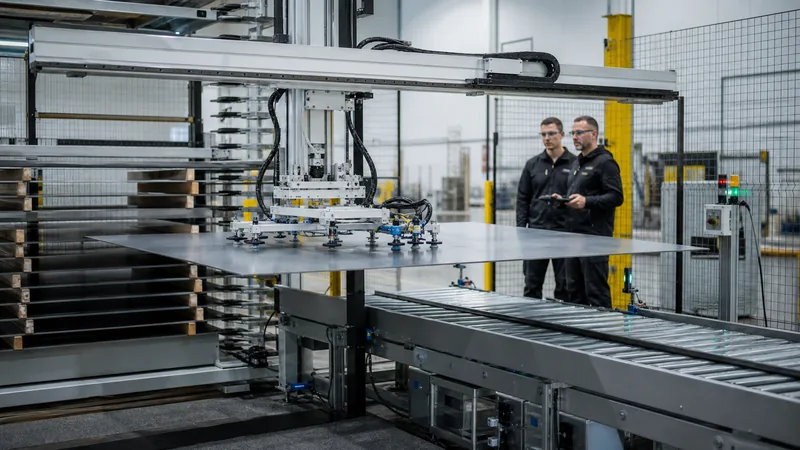
Quick answer: An automatic feeding system for fragile parts must control pickup, support, orientation, acceleration, placement, sensing, and recovery without creating unacceptable marks, stress, or drops.
Start with the worst real parts, not ideal drawings. Surface finish, porosity, flatness, stiffness, edge condition, protective film, moisture, dust, stacking, and separation behavior can determine whether vacuum, gripping, gantry, robot, lift, or conveyor feeding is suitable.
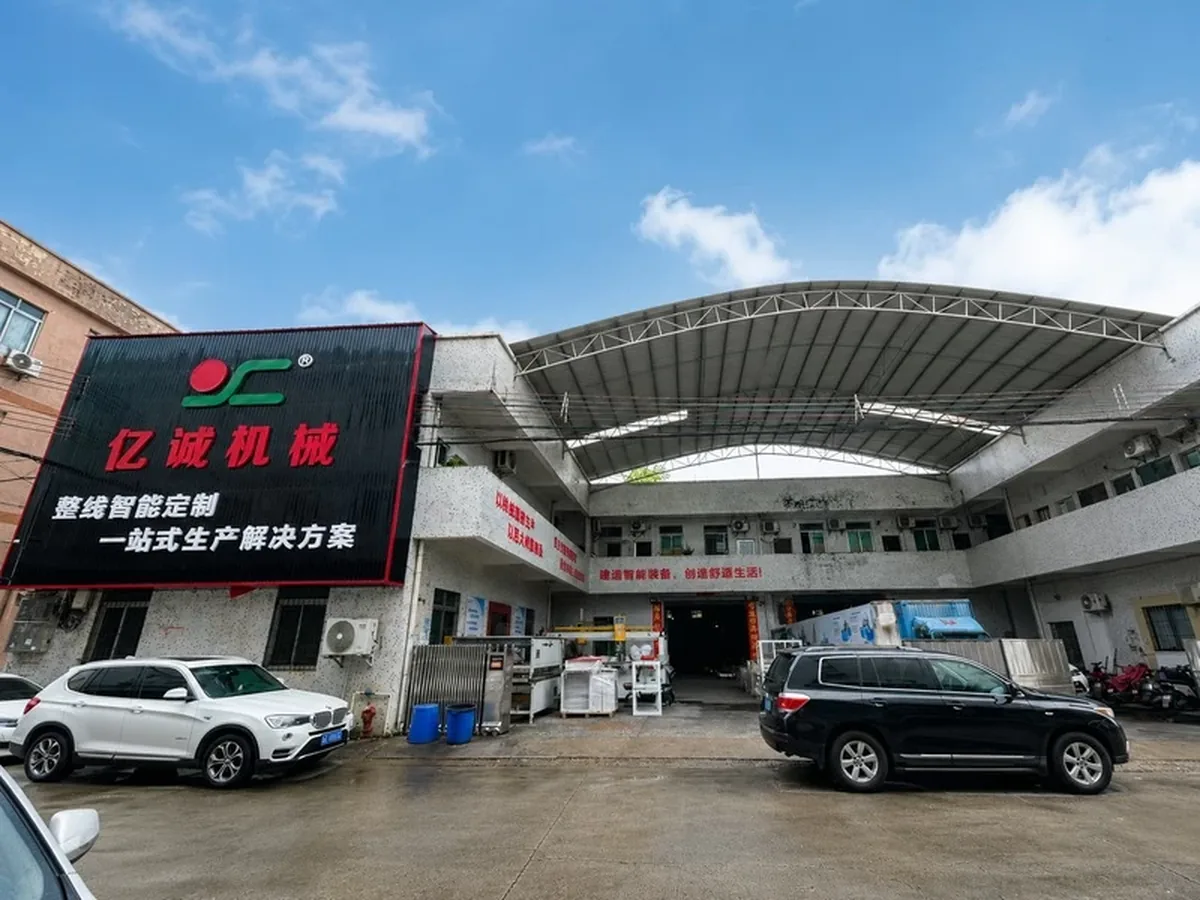
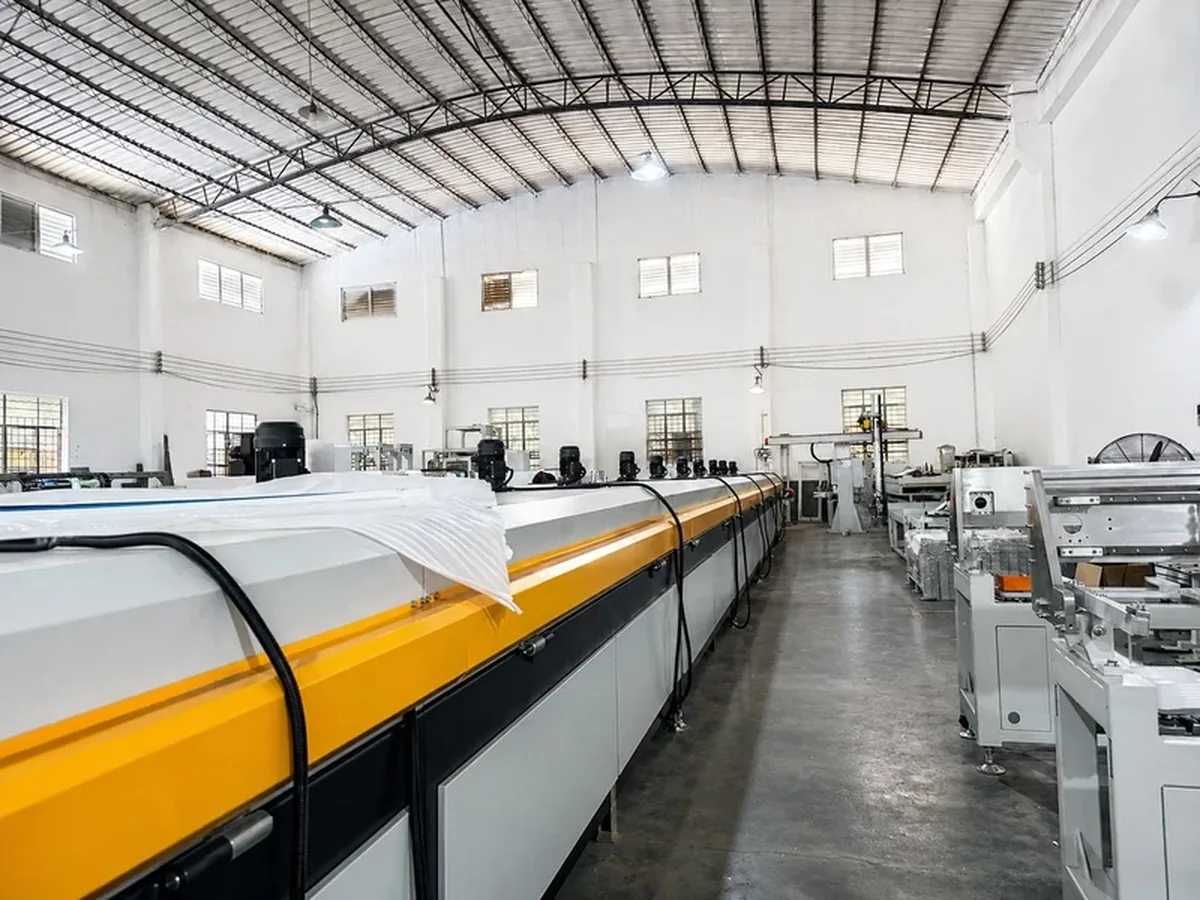
Review YISEN’s related equipment category, custom automation service process, and manufacturing overview before requesting a project-specific proposal.
Automatic feeding system selection criteria
| Decision factor | Buyer question | Evidence to request |
|---|---|---|
| Presentation | Are parts stacked, racked, nested, random, or separated? | Representative load unit and variation study |
| Grip or support | Where can force or vacuum be applied without marks or breakage? | Contact map and grip trials |
| Part detection | How are presence, orientation, doubles, separation, and pick success detected? | Sensor test on real surfaces |
| Motion | What acceleration, vibration, sag, and settling limits apply? | Motion trial and part-condition inspection |
| Recovery | How are failed picks, dropped parts, jams, and broken parts handled? | Safe recovery sequence |
| Changeover | Which tooling, recipes, racks, and guides change? | Demonstrated product transition |
A practical procurement process
- Characterize the load unit. Measure rack, stack, separator, spacing, part-to-part friction, protective materials, and tolerances. Feeding performance begins with repeatable presentation.
- Run grip and damage trials. Test clean, dusty, cold, warm, coated, and difficult samples as relevant. Inspect surfaces and edges after repeated pickup and placement.
- Design detection and fallback. Confirm pickup, double part, orientation, empty rack, blocked discharge, tool condition, and loss of utilities. Define where a part goes when confidence is low.
- Integrate safe replenishment. Review how operators replace racks or stacks, clear damaged material, clean tooling, and enter guarded areas. Coordinate replenishment with line control.
Common purchasing mistakes to avoid
- Choosing tooling from weight alone. Surface, stiffness, center of gravity, acceleration, seal, geometry, and contamination also affect grip.
- Assuming every part arrives separated. Static, adhesion, film, moisture, nesting, or deformation can cause double picks.
- Testing only new clean tooling. Include wear, contamination, cleaning, replacement, and verification in the maintenance plan.
Practical buying scenario
A large glass-panel feeder may use multiple vacuum zones and support points, but the final arrangement should be verified on the buyer’s thicknesses, coatings, protective films, and rack conditions. Safe recovery from a failed pick is as important as normal motion.
Buyer FAQ
Is vacuum handling safe for glass?
It can be, when surface, seal, support, redundancy, monitoring, motion, maintenance, and failure response are appropriate and validated.
When is a gantry better than a robot?
Compare reach, path, floor space, payload, stiffness, orientation, flexibility, tooling, integration, maintenance, and lifecycle cost for the actual task.
How are double parts detected?
Possible methods include thickness, vacuum behavior, weight, vision, separation motion, and mechanical checks. Validate the chosen method on real variation.
What happens if power or air is lost?
The design should define stored energy, load retention, controlled stop, alarms, safe access, and recovery for each relevant utility loss.
How should feed rate be proven?
Measure the complete sequence with representative replenishment, pickup, placement, checks, faults, and downstream handoff—not ideal motion alone.
Prepare a useful RFQ
For a feeding-system review, send the product type, material and surface, dimensions and weight, presentation method, application environment, contact restrictions, customization needs, expected quantities and mix, packaging or rack design, destination country, and target startup date. Confirm all final specifications, compliance responsibilities, commercial terms, and acceptance criteria with the supplier and qualified U.S. specialists.
For a focused automatic feeding system for fragile parts discussion, submit the project details to YISEN. The technical team can review the confirmed application and propose the next engineering step.