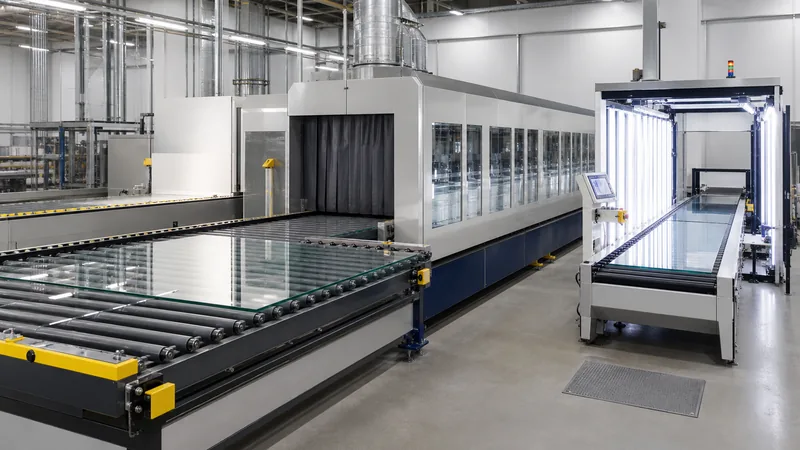
Quick answer: Drying, conveying, and inspection stages should be designed as one glass printing process. Ink requirements, panel condition, contact restrictions, thermal behavior, takt time, cooling, defect criteria, and upstream/downstream signals all affect the configuration.
Avoid selecting each station from an isolated catalog specification. Ask the equipment supplier and ink/process owner to document assumptions, then confirm them with representative samples before the line scope is frozen.
Review YISEN’s related equipment category, custom automation service process, and manufacturing overview before requesting a project-specific proposal.
Glass printing line stage-selection criteria
| Decision factor | Buyer question | Evidence to request |
|---|---|---|
| Drying process | What conditions does the approved ink process require? | Ink/process owner recommendations and sample results |
| Conveyor contact | Which surfaces and edges may touch guides, belts, or rollers? | Contact map and cleanability review |
| Thermal transition | Does glass need controlled heating, cooling, or dwell before the next step? | Process profile and handling limits |
| Inspection | Which defects are visible, measurable, and actionable at each point? | Defect catalog and inspection method |
| Line balance | How do cycle times and short stops affect each stage? | Timing model and buffer strategy |
| Interfaces | Which signals govern ready, busy, fault, reject, and recipe status? | Interface-control document |
A practical procurement process
- Confirm the ink and substrate process. Record glass coating, surface preparation, ink family, print thickness assumptions, and the required curing or drying window. Confirm with the responsible material supplier when needed.
- Protect the printed surface. Define when contact is permitted and which supports remain clean. Include broken glass, ink contamination, and cleaning access in the conveyor design review.
- Place inspection where it changes action. An inspection step is useful when its result can stop, reject, adjust, or trace the process. Define who responds to each defect and how the result is recorded.
- Test interfaces under faults. Simulate upstream starvation, downstream blockage, dryer fault, inspection reject, emergency stop, and restart. Confirm that glass remains controlled and recoverable.
Common purchasing mistakes to avoid
- Treating dryer length as proof of process capability. Performance depends on the complete thermal and material process, not enclosure length alone.
- Inspecting without a defect standard. Operators and vision systems need agreed examples, limits, lighting, and disposition rules.
- Ignoring cooling and downstream contact. A part that appears dry may still need controlled cooling or dwell before handling.
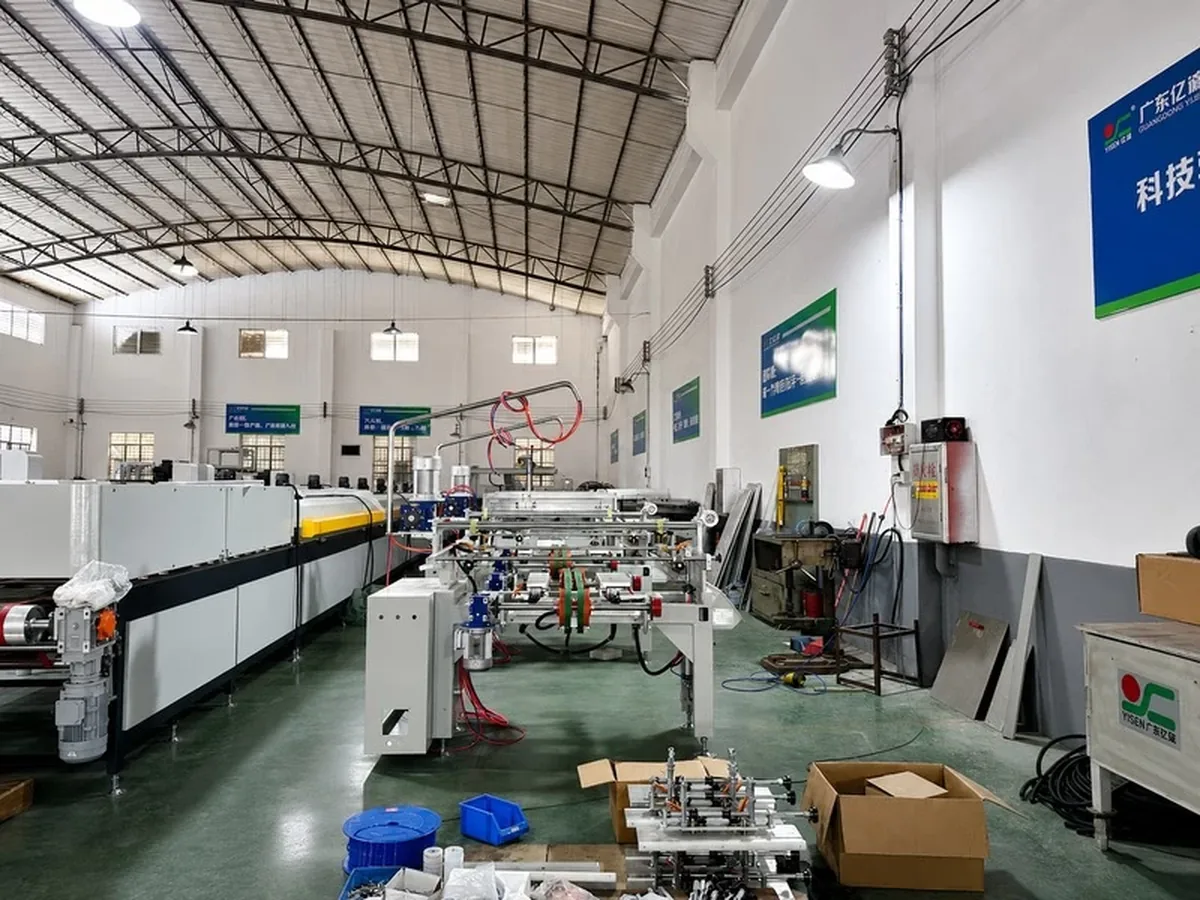
Supplier catalog context
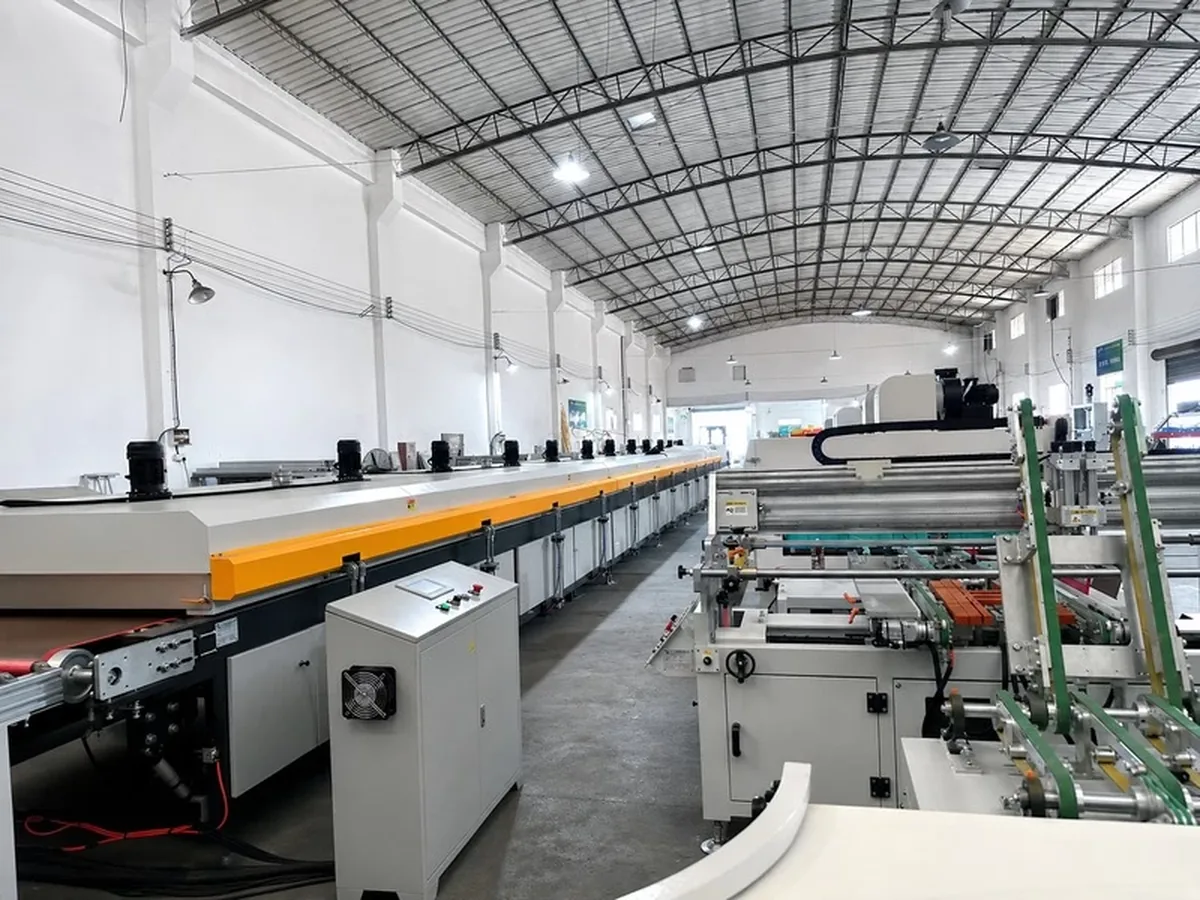
The 2025 YISEN catalog illustrates an automatic screen printing line that can combine loading, cleaning, screen printing, conveying, a tunnel drying section, and downstream arrangement. That published configuration supports evaluating the stations as one coordinated process, while the final sequence and interfaces should be confirmed for the buyer’s actual glass and ink system.
Practical buying scenario
For printed appliance panels, the line may need to protect a decorative surface while maintaining orientation into inspection. The buyer should supply acceptable and rejected samples so detection, handling, and disposition can be tested together.
Buyer FAQ
Can one dryer handle different inks?
Possibly, but compatibility should be confirmed for each approved process. Recipes, ventilation, cleaning, and changeover requirements may differ.
Should inspection be manual or automated?
Base the choice on defect type, visibility, takt, traceability, false-reject risk, and the action taken after detection. A hybrid approach is common.
How are broken panels handled?
The design should define containment, access, cleanup, restart, and protection of downstream equipment without exposing workers to uncontrolled glass.
What conveyor data should be requested?
Ask for contact materials, support spacing, speed range, drive zones, accumulation logic, cleanability, allowable orientation, and interface signals.
How should line balance be proven?
Use measured or justified process times and demonstrate representative products, stops, and restarts during acceptance testing.
Prepare a useful RFQ
For a line-stage review, provide the glass and ink process, dimensions, application environment, drying and inspection criteria, customization needs, production mix, packaging or rack interfaces, destination country, and project timing. Confirm all final specifications, compliance responsibilities, commercial terms, and acceptance criteria with the supplier and qualified U.S. specialists.
For a focused glass printing line drying conveying inspection discussion, submit the project details to YISEN. The technical team can review the confirmed application and propose the next engineering step.