
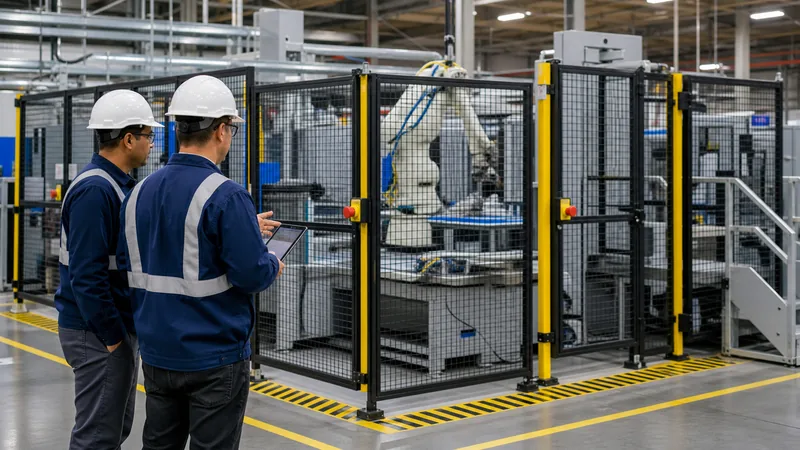
Quick answer: Custom automation machine safety requirements should be defined before design release and reviewed for the final workplace. The buyer and supplier need clear responsibility for risk assessment, guarding, controls, hazardous-energy isolation, access, validation, training, and documentation.
In the United States, OSHA’s general machine-guarding and hazardous-energy requirements may apply to industrial equipment and servicing activities. The final employer should obtain qualified safety and legal review for the actual machine, process, and site.
Review YISEN’s related equipment category, custom automation service process, and manufacturing overview before requesting a project-specific proposal.
Custom automation machine safety requirements to document
| Decision factor | Buyer question | Evidence to request |
|---|---|---|
| Hazards and tasks | What normal and non-routine tasks expose people to motion or stored energy? | Task-based risk assessment |
| Safeguarding | Which barriers, interlocks, sensors, distances, and procedures reduce risk? | Guarding layout and safety-function list |
| Energy control | How are electrical, pneumatic, hydraulic, gravity, thermal, and other energies isolated? | Energy-isolation drawing and procedure inputs |
| Operating modes | How do setup, teaching, manual, automatic, maintenance, and recovery differ? | Mode and permission matrix |
| Validation | Who tests safety functions and records results? | Validation plan and report |
| Handover | What labels, manuals, training, diagrams, and maintenance instructions are delivered? | Safety deliverables register |
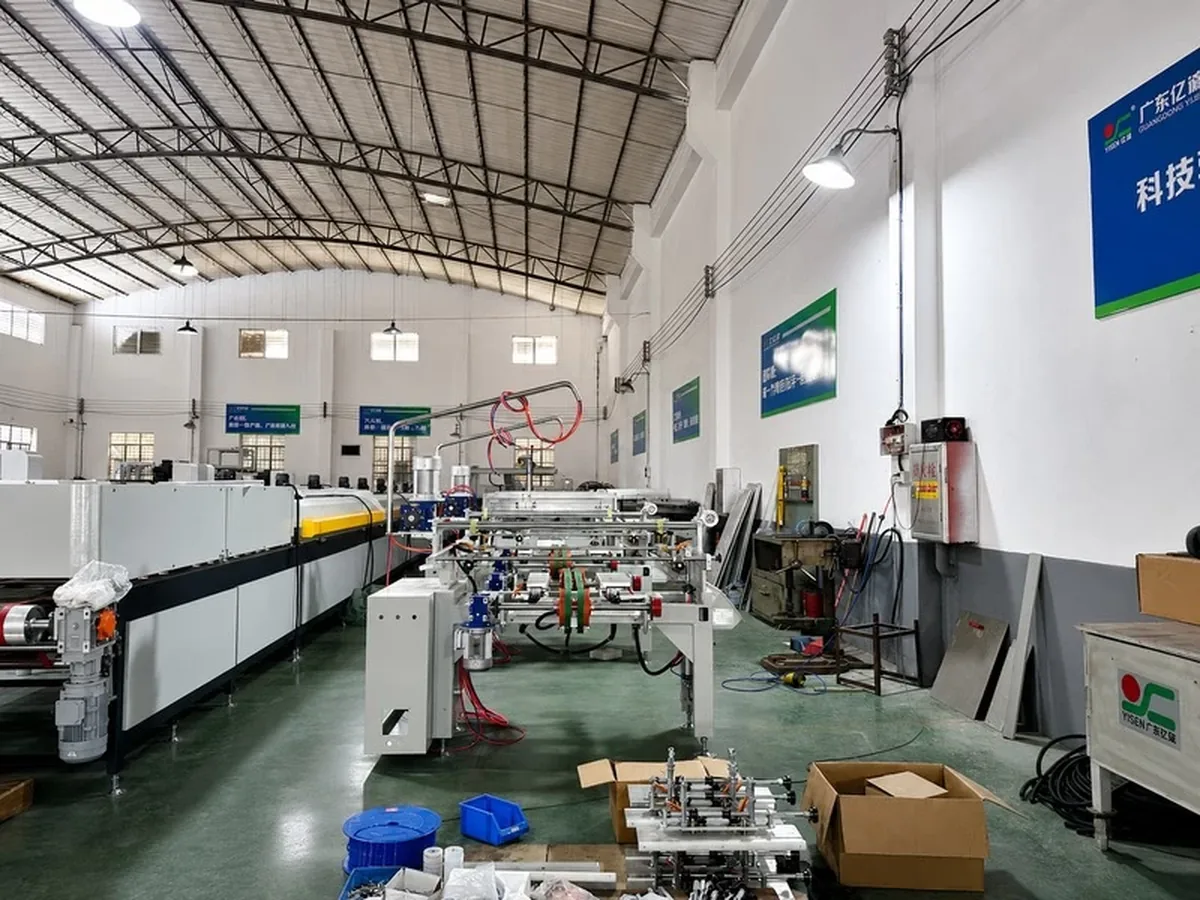
A practical procurement process
- Identify tasks throughout the lifecycle. Include transport, installation, setup, production, cleaning, jam clearing, troubleshooting, maintenance, tool change, and decommissioning. Many risks occur outside normal automatic operation.
- Design out access before adding controls. Reduce or remove the need to enter hazardous areas. Then select safeguards and control measures that fit the remaining tasks and foreseeable misuse.
- Define energy isolation. List every energy source, isolation device, dissipation method, lockable point, verification step, and stored-energy condition. Coordinate the machine design with the employer’s lockout/tagout program.
- Validate at the supplier and site. Test individual safety functions, stop behavior, guard access, reset logic, operating modes, fault response, and changes. Repeat relevant checks after installation and integration.
Common purchasing mistakes to avoid
- Treating a component label as system approval. A listed component does not by itself validate the complete machine or application.
- Using an emergency stop as the main safeguard. Emergency stops supplement risk reduction; they do not replace required guards or safe design.
- Leaving maintenance access undocumented. Technicians need safe, practical access and energy-control information for foreseeable tasks.
Practical buying scenario
A robotic handling cell may be well guarded in automatic mode but require controlled access for setup and recovery. The design review should define reduced-risk modes, permissions, safe positions, reset behavior, and the employer’s energy-control procedure.
Current U.S. and technical references
Requirements can change and depend on the final application. Review current official guidance and obtain qualified advice where needed.
Buyer FAQ
Does OSHA certify industrial machines?
OSHA enforces workplace safety requirements; equipment acceptance and third-party evaluation depend on the applicable product, workplace, authority, and contract.
Who is responsible for the risk assessment?
Responsibilities should be defined contractually, but the final employer still needs to evaluate the installed application and worker tasks.
Are interlocked doors enough?
Not automatically. Guard construction, distance, access, stopping performance, reset logic, bypass control, and the specific hazard all matter.
What should be included for lockout/tagout planning?
Provide energy-source information, lockable isolation points, stored-energy controls, diagrams, and maintenance guidance so the employer can develop site procedures.
When should safety validation occur?
Validate during build and FAT, after installation, after integration changes, and after safety-related modifications as required by the project and applicable rules.
Prepare a useful RFQ
For a safety-focused concept review, send the product and process, materials, dimensions, operator tasks, application environment, custom functions, expected volume, packaging interfaces, destination country, plant standards, and target installation date. Confirm all final specifications, compliance responsibilities, commercial terms, and acceptance criteria with the supplier and qualified U.S. specialists.
For a focused custom automation machine safety requirements discussion, submit the project details to YISEN. The technical team can review the confirmed application and propose the next engineering step.