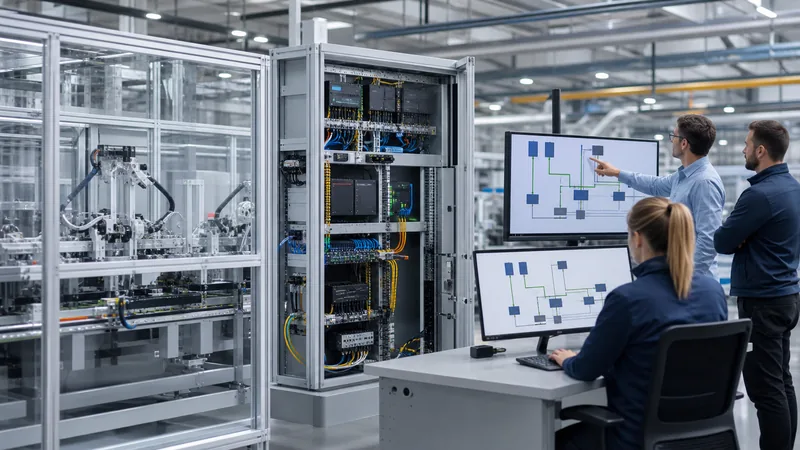
Quick answer: OT cybersecurity for industrial equipment should be addressed during procurement, not after the controls are connected. Buyers need an inventory of digital assets, interfaces, accounts, remote-access methods, backups, update responsibilities, logging, and recovery procedures.
NIST SP 800-82 Rev. 3 provides current guidance for securing operational technology while considering performance, reliability, and safety. Use a risk-based review with the buyer’s IT, OT, engineering, safety, and supplier teams.
Review YISEN’s related equipment category, custom automation service process, and manufacturing overview before requesting a project-specific proposal.
OT cybersecurity questions for industrial equipment procurement
| Decision factor | Buyer question | Evidence to request |
|---|---|---|
| Asset inventory | Which controllers, computers, drives, cameras, gateways, and software are included? | Hardware/software bill of materials |
| Connectivity | Which ports, protocols, cloud services, wireless links, and data flows are required? | Network and data-flow diagram |
| Identity | How are default, shared, service, and administrator accounts controlled? | Account and credential-management plan |
| Remote access | How is access approved, authenticated, limited, monitored, and disabled? | Remote-support architecture and procedure |
| Maintenance | Who provides updates, vulnerability information, backups, and restoration support? | Lifecycle-support matrix |
| Recovery | Can the accepted machine state be restored after failure or compromise? | Tested backup and restore procedure |
A practical procurement process
- Classify the machine and connections. Document the process impact of loss of availability, integrity, or confidentiality. Identify safety dependencies and the consequences of unauthorized control changes.
- Minimize required exposure. Connect only services needed for operation and support. Use network segmentation, controlled remote access, and site-approved security architecture rather than direct unmanaged internet access.
- Plan accounts and supplier access. Remove or control default credentials, assign named responsibilities, define emergency access, and ensure supplier access can be approved and revoked by the asset owner.
- Test recovery before production. Collect controller, HMI, computer, recipe, configuration, and license backups. Verify that qualified staff can restore the accepted version with documented tools and dependencies.
Common purchasing mistakes to avoid
- Blocking all updates without a risk process. Unmanaged legacy software can create risk, but changes must also be tested for production and safety impact.
- Treating remote support as a simple yes/no option. Architecture, approval, authentication, logging, duration, scope, and shutdown capability determine the risk.
- Forgetting non-PLC assets. Industrial PCs, cameras, drives, routers, engineering tools, and vendor applications may also require management.
Practical buying scenario
A U.S. plant may allow remote diagnostics only through its approved gateway during scheduled sessions. The machine supplier should document required tools and ports, while the buyer controls connection approval, identities, session records, and termination.
Current U.S. and technical references
Requirements can change and depend on the final application. Review current official guidance and obtain qualified advice where needed.
Buyer FAQ
Should industrial equipment connect directly to the internet?
Direct exposure is rarely necessary. Use the asset owner’s approved architecture and limit connectivity to documented business and support needs.
Who owns passwords and source files?
Define credential custody, software rights, backups, protected intellectual property, and emergency access in the contract and handover plan.
How often should control software be patched?
Use a risk-based maintenance process that considers vulnerabilities, vendor support, testing, compatibility, safety, downtime, and compensating controls.
What logs are useful?
Consider account changes, remote sessions, alarms, configuration changes, security events, and time synchronization, subject to system capability and site policy.
What should happen when supplier support ends?
Plan for software versions, backups, replacement hardware, licenses, documentation, migration options, and ownership of essential engineering tools.
Prepare a useful RFQ
For an OT-aware equipment review, send the process and product type, materials and dimensions, plant network policy, application environment, customization and remote-support needs, production profile, destination country, and target commissioning date. Confirm all final specifications, compliance responsibilities, commercial terms, and acceptance criteria with the supplier and qualified U.S. specialists.
For a focused OT cybersecurity for industrial equipment discussion, submit the project details to YISEN. The technical team can review the confirmed application and propose the next engineering step.